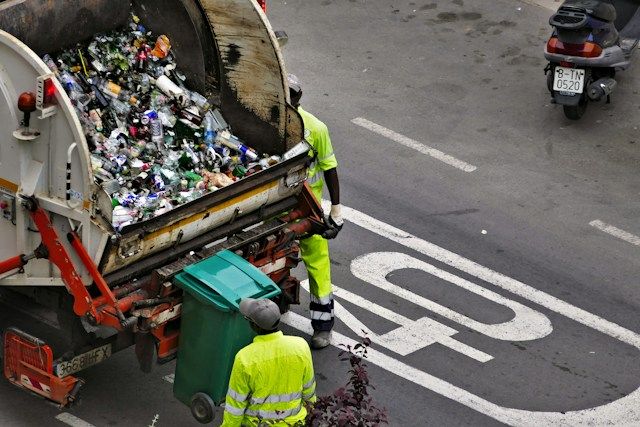
You rinse the bottle, drop it in the recycling bin and feel the job is done. For many of us, that is where the story ends.
For the plastic, it is often where a long journey begins. “Recycled” does not always mean processed down the road, and sometimes it means loaded into a container and shipped overseas.
How Plastic Waste Travels
For years, sending plastic waste abroad was a routine part of the UK system. UK exports of plastic waste for recycling peaked in 2011, and the largest destinations in 2023 were Turkey and the Netherlands. Domestic recycling has grown in recent years and overtook exports in 2021 for the first time in almost two decades.
However, exports are still substantial. The Environmental Investigation Agency reports that the UK exported 598 million kilos of plastic waste in 2024, the equivalent of 60,000 refuse trucks. Shipments to one country can also be passed on to another. Campaigners point to UK plastic waste routed through EU countries such as the Netherlands that may end up in non-OECD countries.
Why It Matters for the Oceans
A recycling plant with proper controls is one thing. A country without the infrastructure to cope is quite another. The European Commission notes that for decades, millions of tonnes of European plastic waste were shipped abroad, often ending up in illegal dumpsites, open fires or marine ecosystems in countries that lacked the capacity to manage it.
This pattern has a history. When China banned plastic waste imports in 2018, neighbouring countries including Malaysia, Vietnam, Thailand, Indonesia and Turkey began taking in large volumes, and many lacked the waste management infrastructure to cope. Since 1988, more than a quarter of a billion tonnes of plastic waste has been exported around the world. Critics call the result, “waste colonialism,” because the burden falls mainly on the environment, communities and informal waste workers of the Global South. Where collection services are inadequate, waste is often burned or left in open dumpsites, releasing air pollutants that harm human health.
Plastic that is poorly managed on land rarely stays there. It can become litter that pollutes soils, rivers and oceans and harms the creatures that live in them. Many of the same regions are also among the most vulnerable to climate change, despite contributing comparatively little to it. A bottle that leaves our bin can still end up in the sea, or in someone else’s neighbourhood.
What Is Changing
The EU is acting. Under its revised Waste Shipment Regulation, a complete ban on plastic waste exports to non-OECD countries begins on 21 November 2026. The ban applies at least until 21 May 2029. After that, non-OECD countries can ask to join an approved list, but they must demonstrate they can manage the waste in an environmentally sound way. Exporters of plastic waste must also now follow a prior notification and consent procedure, which applies from 21 May 2026.
The UK picture is less settled. The Government made a 2019 manifesto commitment to ban plastic waste exports to non-OECD countries. Provision for this was included in the Environment Act 2021, with further consultation promised before it comes into force. In October 2025, dozens of environmental organisations wrote to the Environment Secretary noting that the UK had yet to act and urged a phased ban on exports to both OECD and non-OECD countries by 2028.
What You Can Do
Exporting plastic waste relocates the problem. The more reliable fix is to create less of it, and that starts with small habits and the pressure we put on decision makers.
- Reduce what you buy. The plastic never produced is the plastic that never has to travel.
- Check what your local council actually collects for recycling, and sort accordingly.
- Support our BinForGreenSeas project which stops litter reaching our waterways before it begins its journey to the sea.