
Every summer the same headlines show up: a lake turns green overnight, a beach gets closed, a warning goes out not to swim. An algae bloom is exactly what it sounds like, a rapid explosion of algae growth, usually fed by warm water and a surge of nutrients like fertilizer runoff. It turns water cloudy, green, sometimes toxic, and it has become a familiar marker of a hot summer. There is a second story hiding inside these blooms though, one that has more to do with plastic in the water than the algae itself.
It Starts with Heat
Marine heatwaves are now becoming a normal part of summer rather than a rare event. Ocean temperatures surged across Europe this year, in some places running as much as 5°C above average, straining ecosystems from the Mediterranean to the Baltic. As the ocean’s baseline temperature keeps climbing, marine heatwaves will keep getting longer, more frequent and more severe. Warmer, nutrient-rich water is exactly the kind of environment algae thrives in. Therefore, more heatwaves generally means more blooms.

Algae Breaking Plastic Down
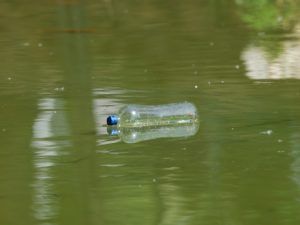
Researchers at the Korea Advanced Institute of Science and Technology recently found that algal blooms can speed up plastic pollution. When there is a bloom, a thick layer of algae and bacteria colonizes plastic surfaces. As the plastic reacts chemically with oxygen, its structure changes, becoming more fragile and developing microscopic cracks. Water movement then breaks these weakened pieces apart, fragmenting them into microplastics. The researchers concluded that an integrated environmental management system is needed, one which takes both water quality and plastic pollution into account.
The Twist: Plastic Feeds the Algae Back
This is where it gets a bit chicken-and-egg. It is not just that algae accelerates the breakdown of plastic, there is evidence the relationship runs in both directions. Lab experiments have found that microplastics themselves can promote algae growth, with green algae growing faster in the presence of common plastic microbeads.
Separately, high concentrations of petroleum-based plastic triggered dense algal blooms in pond experiments. This, in part, was because it disrupts the zooplankton which would normally eat the algae, and also because it changes the microbial community altogether.
Plastic may be doing more than getting broken down by blooms. It may also be helping cause them in the first place.
Why This Is Not Just an Ocean Story
It is tempting to file this under “problems that stay in the water,” but microplastics generated this way do not stay contained. They have already been documented working their way into drinking water. In tap water it was measured at up to 61 particles per litre, while bottled water was considerably higher. From there, microplastics move through the food web via seafood, salt, and a surprising range of everyday foods, and have been detected in human blood, breastmilk and other tissues. None of this means every algae bloom is quietly manufacturing a health crisis. It does, however, indicate the two problems of warming water and plastic waste are tangled together in ways that make each one harder to manage on its own.
So Where Does That Leave Us?
There is no clean fix here, and that is sort of the point. A hotter summer does not just mean more algae in the headlines, it may mean more plastic quietly turning into something smaller, more mobile and harder to see. Next time a bloom shows up on the news, it is worth remembering that the green water is not the whole story. Somewhere underneath it, plastic is breaking apart a little faster than it otherwise would.