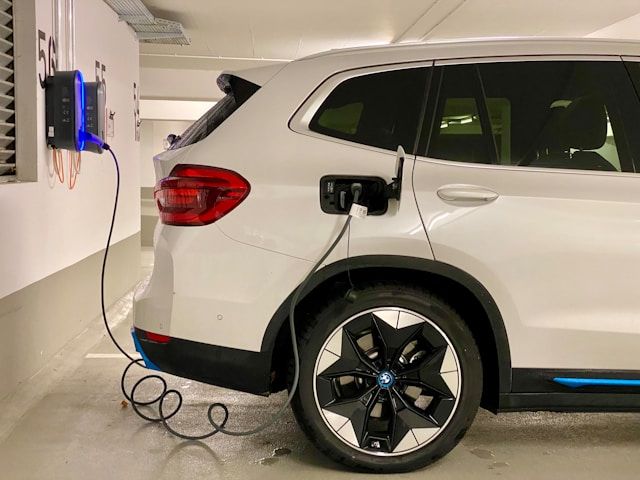
Electric cars are meant to be the clean option. No exhaust pipe, no tailpipe fumes, no smog. That’s the story we’re told, and it’s mostly true. However, there’s a second source of pollution that has nothing to do with what comes out of the engine and it’s been quietly getting worse as more electric cars hit the road: microplastics!
It’s Not Exhaust, It’s Rubber Tyres
Every car sheds tiny bits of rubber and synthetic material each time the tyres roll on the road. This is called tyrewear and it happens whether a car runs on petrol or electricity. Scientists in Hawaii recently got a clear look at just how big a factor this is. A team from the Center for Marine Debris Research built a test road out of asphalt mixed with recycled fishing nets and household plastic, to see if the material would shed microplastics into the environment. After 11 months of ordinary traffic, they swept up the road dust and tested it. Tyre particles outweighed the road’s own plastic content so heavily that researchers described their analysis of the polymers “like gigantic peaks!”
The road itself held up fine. The cars driving over it were the real source of plastic pollution.
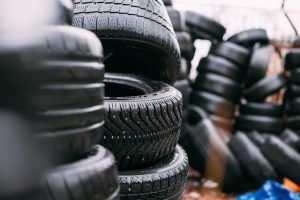
Why Electric Cars Make This Worse
Electric cars are heavier than petrol cars, mostly because of the battery pack, and heavier cars wear down their tyres faster. One estimate found the average battery weight for an EV is roughly 1,000 lbs. When added to the weight to a midsize car, it increases tyrewear by about 20%. Popular electric SUV’s generated roughly a quarter more tyre pollution than a comparable hybrid.
Separate modelling done in Stockholm found that if every car on the road there suddenly became electric, tyre particle pollution in the city would rise by around 13%.
Cutting exhaust emissions still matters enormously and electric cars remain a real improvement on that front. The tyre and microplastic problem simply travels along with them, and in some cases grows slightly larger.
Where Batteries Actually Comes From
The batteries that make electric cars heavier have to come from somewhere. Much of the world’s lithium is drawn from brine pools in South America’s so-called Lithium Triangle, spanning Chile, Argentina and Bolivia, in a region that is already short on water. In Chile, lithium extraction has been reported to draw on around 65% of the region’s available water, competing directly with local farming and Indigenous communities. Researchers studying the industry have framed this as a wider pattern, where demand for greener cars in wealthier countries shifts real environmental and social costs onto communities in the Global South.
“Clean” rarely means impact-free. Usually it means the impact has moved somewhere less visible.
Where Does That Leave the Debate?
Tyre particles are one of the biggest sources of microplastic pollution in our waterways. Wind carries the smallest tyre particles through the air. Rain washes the rest into drains and rivers, which eventually lead to the ocean. Switching to electric cars reduces the greenhouse gas emissions but, for now, creates another set of problems. There isn’t a neat, tidy answer here. This is more of an invitation to notice something that rarely gets mentioned: the cleanest-looking option on the surface still leaves rubber on the road.